In this guide
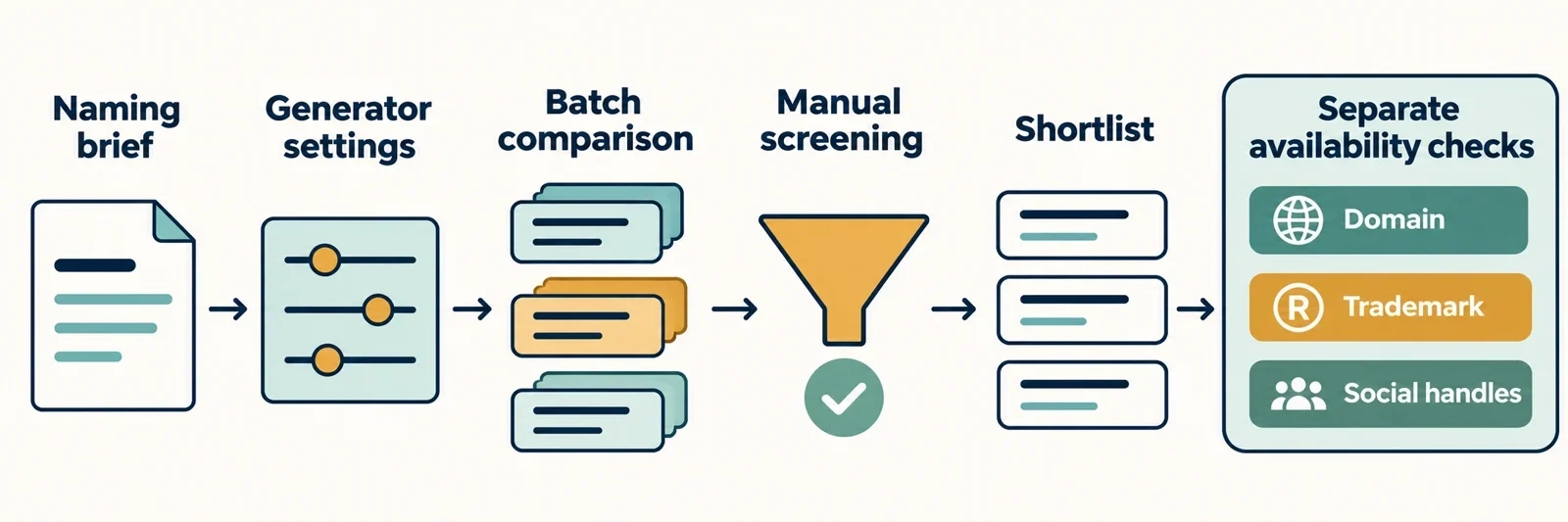
To shortlist product names with a brand name tool, write a brief, generate comparable batches, and screen the strongest suggestions for fit, pronunciation, spelling and recall. Give each finalist a clear reason to remain, then gather audience feedback and investigate availability before committing.
The useful output is a small set of defensible choices. An appealing sound can earn a second look, but it should not settle the decision. Use the workflow below to keep your product, audience and intended tone at the center of every comparison.
Write a naming brief before generating
Begin with four decisions: what the product does, who will use it, what distinguishes it and how it should feel. Add an exclusion list so attractive suggestions do not pull the exercise away from its purpose.
Use these prompts to make the brief concrete:
- Product: What useful task does it help someone complete?
- Audience: Who should recognize that the product is for them?
- Distinction: Which benefit should the name support or leave room to explain?
- Tone: What personality should the name express, such as calm or playful?
- Avoid: Which associations, words or impressions would work against the product?
For a hypothetical practice example, imagine a planning product for independent tutors. Its brief could be: “Help tutors organize lesson preparation and administration; communicate calm competence; avoid names that sound like student games.”
Keep this brief visible while reviewing names. If collaborators disagree about the intended audience or personality, settle that disagreement before generating more options.
Translate the brief into generator settings
Translate your brief into the available controls. Keep the complete brief beside the results as your judging reference; use its main ideas to guide settings and, where useful, a short keyword.
| Setting | A practical starting decision |
|---|---|
| Language | Choose the language appropriate to the audience you intend to reach. |
| Preset | Select a naming pattern that offers a useful direction to explore. |
| Style | Choose a direction consistent with the personality in your brief. |
| Candidate count | Request a batch small enough to review carefully in one sitting. |
| Length | Set a manageable constraint using the units shown by the tool. |
| Keyword | Try a short idea word connected to the product or benefit. |
| Seed | Record any seed value shown and leave it unchanged during comparisons. |
Presets select naming patterns; you still decide whether the results suit your product and audience. Record the actual option labels you choose so you can understand a promising batch later.
Avoid treating settings as verdicts. A name produced under your preferred style still needs individual review.
Compare batches with one deliberate change
Start with a batch without a keyword. Save the suggestions and record the language, preset, style, candidate count, length and any seed value. Then generate another batch with a short idea word, keeping the other settings consistent.
For the hypothetical tutor product, “lesson” could be an experimental keyword. The question is whether it improves relevance while leaving useful variety. Do several suggestions feel appropriate, or do they repeat an idea too narrowly?
Compare the batches using the same questions:
- Which suggestions connect most clearly with the brief?
- Which introduce a promising direction you had not considered?
- Which feel too similar to deserve separate consideration?
Save promising directions alongside individual names. “Welcoming names connected with preparation” is a more useful note than “good batch.”
If no candidates appear, review the length constraints and try relaxing a constraint before generating again. Record that adjustment separately so you know which comparison you are making.
Cut names that miss the product or tone
Screen for relevance before becoming attached to how a name sounds. Ask whether each candidate supports the product described in your brief, creates a misleading expectation or communicates an unsuitable personality.
For the tutor example, a name suggesting a student game may conflict with a product aimed at independent professionals. A forceful, competitive name may also deserve scrutiny when the desired tone is calm competence. These are judgments to make against your particular brief.
Write a plain-language reason for each rejection: “Suggests the wrong audience,” “Makes the product sound like classroom equipment,” or “Feels too playful for the intended tone.” Avoid vague notes such as “doesn’t work.”
An appealing candidate can remain under consideration when its connection needs testing. Mark the exact question: “Will tutors understand the preparation association?” That gives the next stage something useful to investigate instead of allowing uncertainty to disappear behind enthusiasm.
Check pronunciation, spelling and recall
Give surviving candidates practical checks that separate what you intend from what other people actually say, type and remember.
- Pronunciation: Read each name aloud yourself, then show the written name to listeners and ask them to pronounce it without coaching. Note where their versions differ.
- Spelling: Say the name to someone who has not seen it and ask them to type it. Record the actual response, including omitted letters or unexpected word breaks.
- Recall: After an unrelated task or distractor question, ask which names participants remember without displaying the list again.
Keep these observations separate. A candidate might be easy to pronounce from text yet difficult to spell after hearing it. Another might produce confident pronunciation but fail to come to mind later.
Use a consistent presentation and avoid correcting people before their first response. Corrections can come afterward if needed. Treat the observations as screening feedback: record difficulties, look for repeated concerns and decide which uncertainties deserve another check.
Build a shortlist with reasons
Create a manual comparison table with one column for each surviving name. Use concrete observations wherever possible, and mark untested items as pending rather than filling them with optimistic guesses.
| Criterion | What to record for each candidate |
|---|---|
| Product fit | The connection to the product, audience or distinguishing benefit. |
| Tone | How the name supports the intended personality. |
| Pronunciation | The versions people used and any recurring hesitation. |
| Spelling | Whether listeners typed the intended form after hearing it. |
| Recall | Whether the name was remembered after attention shifted. |
| Concerns | Confusing associations, unresolved questions and checks still needed. |
Retain distinct contenders with clear strengths. For illustration, an invented candidate such as “LessonNest” might earn further consideration for a welcoming lesson association, while “TutorTrail” might offer a direction centered on progress. Those are hypotheses to test, not audience findings or availability claims.
Save the settings behind each finalist and finish its entry with one sentence: “This name deserves consideration because…” If you cannot complete that sentence specifically, reconsider its place.
Ask intended users what the finalists communicate
Present every finalist with the same short product description. Keep the explanation consistent so your pitch for a favorite does not become part of the comparison.
Begin with open questions before asking for a preference:
- What does this name suggest to you?
- What would you expect the product to help you do?
- How well does it fit the description?
- Which associations feel confusing or unwanted?
Ask intended users to explain their answers. A preference tells you which name someone favors; the explanation helps you understand whether that preference supports your brief.
Before collecting feedback, decide what would change the shortlist. You might remove a candidate if several participants independently expect the wrong kind of product, or investigate an unwanted association before proceeding.
Apply those decision rules consistently. Keep favorable and unfavorable comments beside the same candidate, and record why the feedback changed—or did not change—your judgment. This makes the final discussion easier to review.
Check availability before committing
Treat the shortlist as an intermediate decision. Each generated suggestion still needs separate investigation before you commit to using it.
First, list the markets where you intend to operate and the domains and platforms relevant to your launch. Check the exact domain forms and account names you would want. If a preferred form is unavailable, decide whether an alternative still supports the name and is practical for your audience.
Identify the trademark searches relevant to your intended markets and product category. Seek qualified advice when you need help assessing a potential conflict. Domain or platform availability should not substitute for that investigation.
Maintain an availability log containing the candidate, the place checked, the date and the unresolved question. Revisit checks before committing rather than treating an earlier result as permanent.
Your final decision should connect the brief, screening observations, audience responses and availability findings. Keep another viable contender while unresolved checks remain.